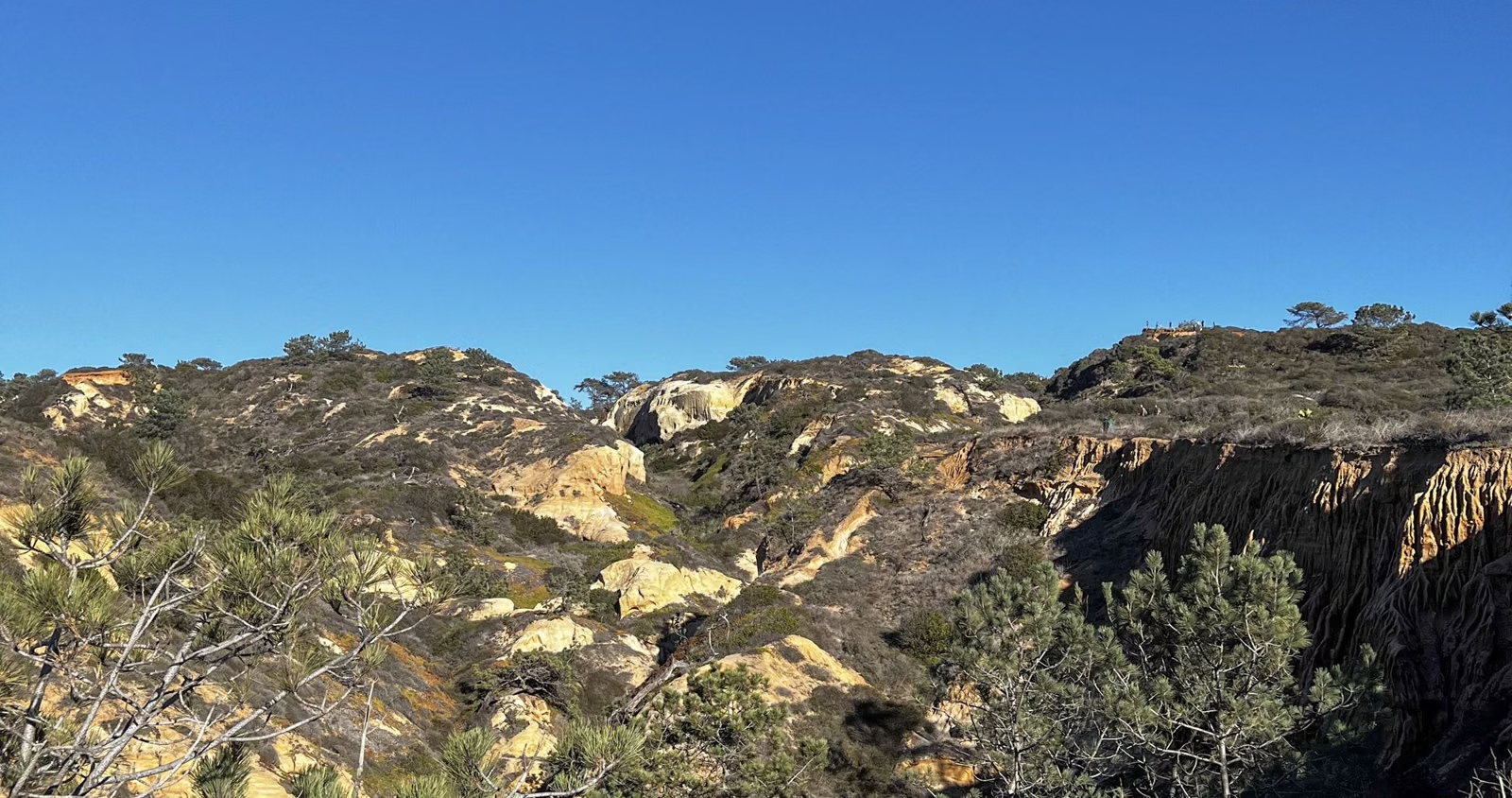
About Torrey Pines
Torrey Pines State Natural Reserve is a roughly 2,000-acre coastal wilderness inside the city of San Diego, between La Jolla and Del Mar, run by California State Parks to protect the rare Torrey pine. It is a state natural reserve, a stricter category than a state park, kept for its rare plants, wildlife and geology. Its protection began in 1899, when San Diego set aside the first 369 acres as a public park.
Torrey Pines at a Glance
A Reserve, Not a Park
State Parks puts it plainly: a reserve is not a park. Of about 280 units in the California state park system, only 14 are state natural reserves, set aside for threatened plants, animals, habitats or geology. That is why Torrey Pines has rules a regular park does not, such as no food above the beach and no dogs anywhere (rules). It is not a national park, though people often search for it as one.
The Kumeyaay
The Kumeyaay people lived at Torrey Pines and across a territory that reached from the Pacific to the Colorado River dunes and south into Baja California. They moved with the seasons in bands of extended families, gathering roots, berries, nuts and seeds, fishing with hooks and nets, and collecting shellfish and grunion on the beaches. Descendants of the Kumeyaay still live in San Diego County.
Point of Trees
Early Spanish explorers called the grove Punto de los Árboles, the "point of trees," and sailors used it as a landmark off the foggy coast. In 1769 the Portolá expedition passed through nearby Sorrento Valley, according to the Torrey Pines Docent Society. In 1850 botanist Charles C. Parry identified the Torrey pine as a new species and named it for his friend John Torrey, a leading botanist of the time.
Saving the Pines
When Parry returned in 1883 he was alarmed at how unprotected the trees were and urged the San Diego Society of Natural History to act. In 1885 the city offered a $100 reward for catching anyone damaging a Torrey pine. Other threats included clearing the trees for cattle grazing. An 1899 city ordinance set aside the first 369 acres as a public park.
Ellen Browning Scripps and Guy Fleming
Newspaperwoman and philanthropist Ellen Browning Scripps bought land that was about to be subdivided and gave the North Grove and Parry Grove to the people of San Diego. In 1916 Guy Fleming, a botanist with the Society of Natural History, reported damage to the trees from heavy use. Scripps rallied public support, and in 1921 she and the City Park Commission made Fleming custodian of Torrey Pines Reserve. By her death in 1932, Scripps had done much to establish the reserve. The Guy Fleming Trail and the Ellen Browning Scripps Overlook carry their names.
The Lodge
The pueblo-style building at the top of the park road was built in 1923 as a restaurant. Today it is the reserve's visitor center.
Geology
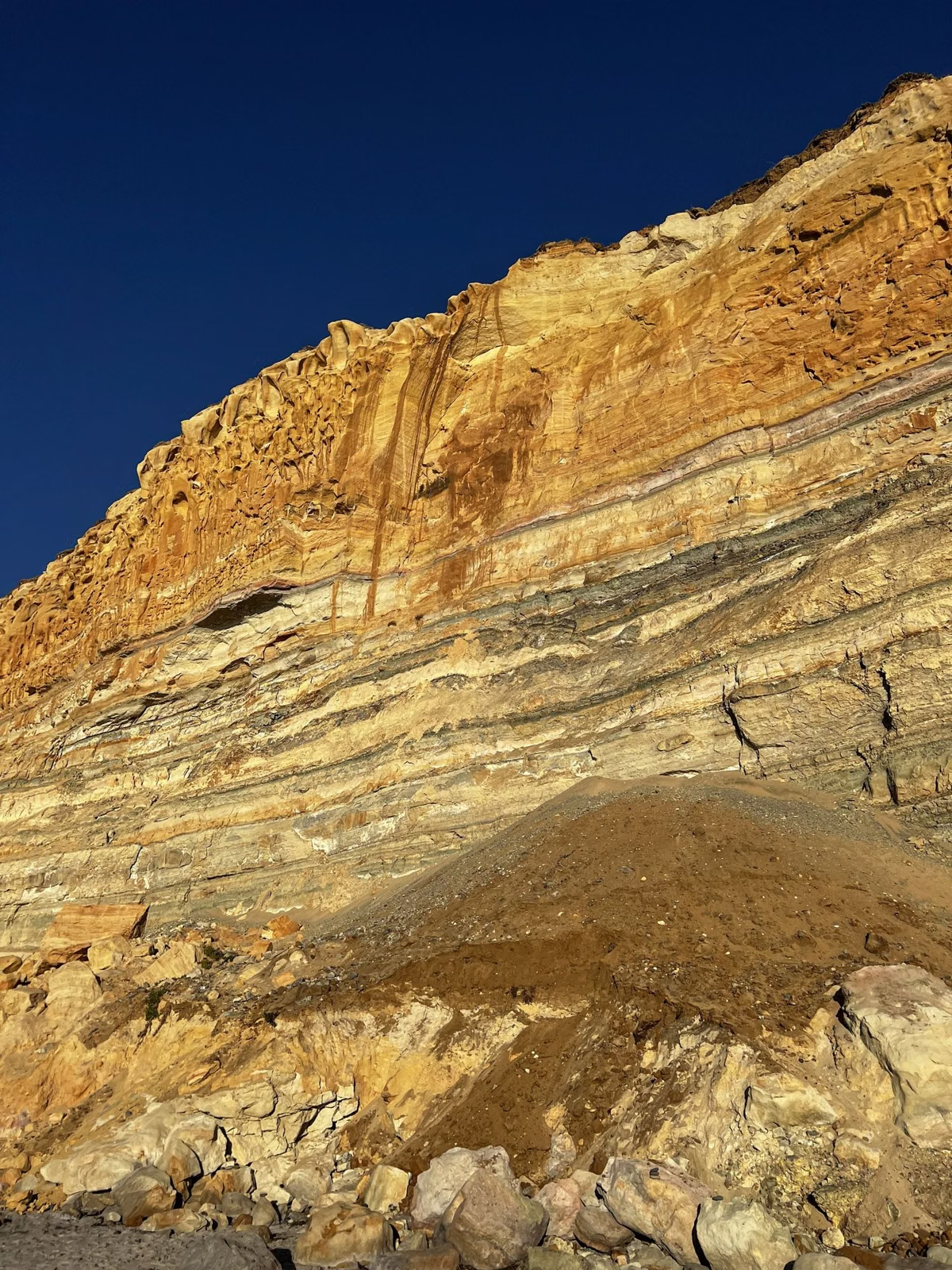
State Parks says nearly a million years of rising and falling seas, heavy rain and stream erosion carved the layered sandstone terraces of the reserve. Some formations are more than 45 million years old, and some of the rocks traveled from as far as central Mexico. Erosion still reshapes the cliffs, which is why the bluffs collapse without warning.
Plants, Wildlife and Climate
The reserve's habitats run from salt and fresh water through coastal strand, sage scrub, salt marsh and chaparral to pine woodland. State Parks counts about 300 endangered and protected native plant species and about 200 protected bird species, and gray whales pass offshore in winter. Temperatures are mild: lows near 45°F in January and highs of 75 to 80°F in August, with fog that can last all day in June and July.
Today
State Parks reports more than 4 million visitors a year. The Torrey Pines Docent Society leads walks and runs educational programs, and the Torrey Pines Conservancy funds projects in the reserve. The reserve is closed until about March 1, 2027 for a utility and accessibility project.
About Torrey Pines FAQ
Is Torrey Pines a national park?
No. It is Torrey Pines State Natural Reserve, run by California State Parks. A natural reserve has stricter rules than a state park.
How big is Torrey Pines State Natural Reserve?
About 2,000 acres, according to the California State Parks brochure.
When did Torrey Pines become protected?
In 1899, when a San Diego city ordinance set aside the first 369 acres. Ellen Browning Scripps later donated more land, and Guy Fleming became custodian in 1921.
Who runs Torrey Pines State Natural Reserve?
California State Parks, San Diego Coast District. The Torrey Pines Docent Society and Torrey Pines Conservancy support it.