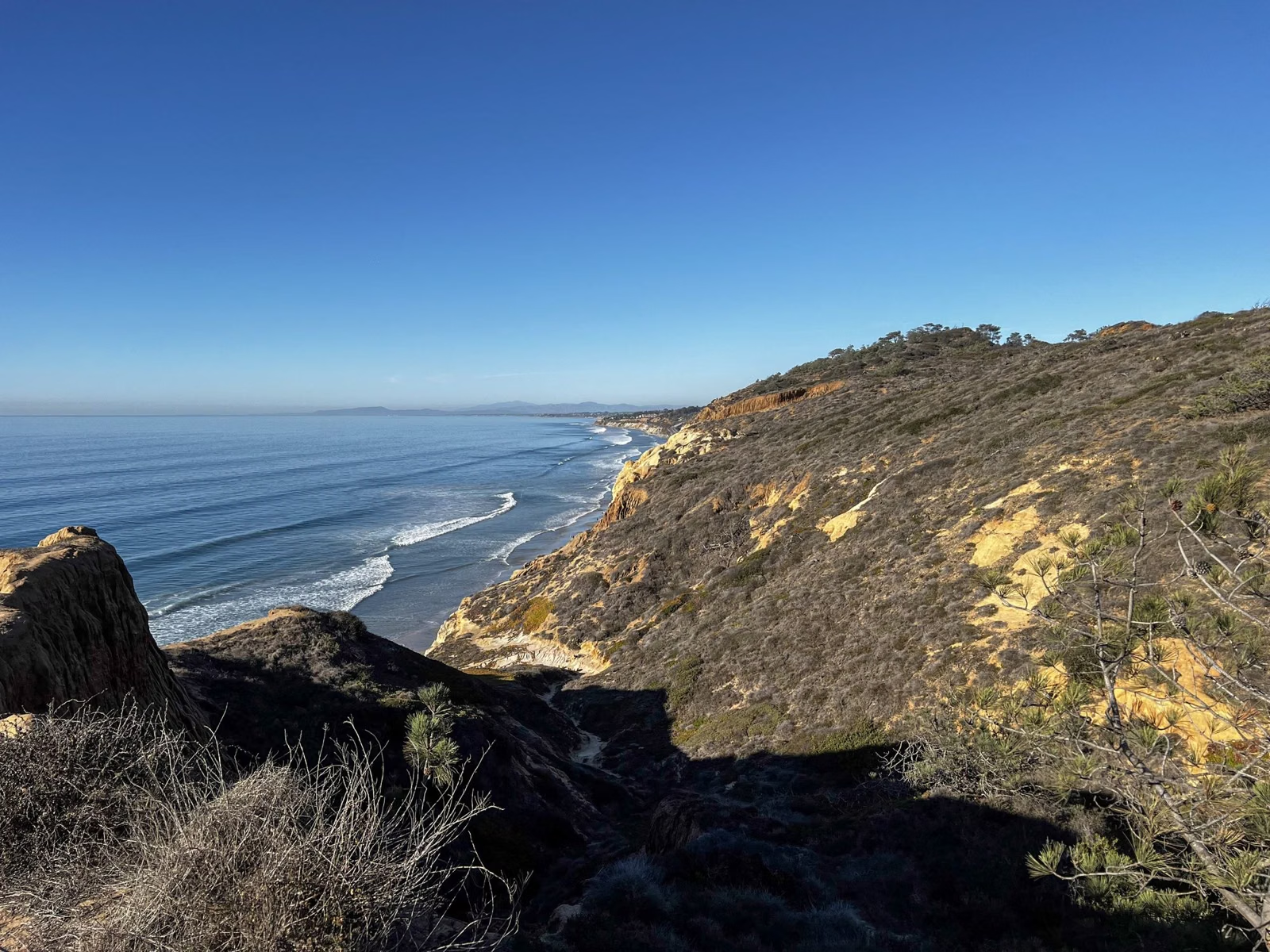
Los Peñasquitos Lagoon
Los Peñasquitos Lagoon is the salt marsh that separates the main Torrey Pines State Natural Reserve from its Extension in Del Mar, and State Parks counts it among the last salt marshes and waterfowl refuges in Southern California. There is no public access or fishing in the lagoon itself. You see it from overlooks and trails around its edge, and from the beach where it meets the ocean.
The Lagoon at a Glance
A Protected Marsh
State Parks maps the lagoon as the Los Peñasquitos Marsh Natural Preserve. The brochure calls it a vital stopping and nesting place for migrating waterfowl and home to several rare and endangered birds. Its salt marsh is one of the habitats that make the reserve so varied, from coastal strand to sage scrub to pine woodland.
Birds to Look For
State Parks says about 200 species of birds are protected at the reserve. Shorebirds listed in the brochure include brown and American white pelicans, black-bellied and snowy plovers, American avocets, western sandpipers, willets, whimbrels, sanderlings, great egrets and long-billed curlews. The infosheet adds peregrine falcons, red-tailed hawks and osprey.
Where to See It
- Discovery Trail, in the main reserve: an accessible 0.13-mile path along the bluff with three overlooks of the marsh.
- Reserve Extension: the Red Ridge Loop and DAR trails look across the lagoon to the main reserve. These trails are open during the closure.
- The beach: Torrey Pines State Beach runs past the lagoon mouth between the North Beach and South Beach lots.
Rules
Stay out of the lagoon and its marsh, and do not fish there. Bring binoculars instead.
Los Peñasquitos Lagoon FAQ
Can you go into Los Peñasquitos Lagoon?
No. State Parks says there is no public access or fishing in the lagoon. View it from trails and overlooks around it.
Where is the best view of Los Peñasquitos Lagoon?
The Discovery Trail in the main reserve and the Red Ridge Loop and DAR trails in the Extension, which is open during the 2026–27 closure.
What birds live at Los Peñasquitos Lagoon?
Pelicans, plovers, avocets, sandpipers, egrets and curlews, among about 200 bird species protected in the reserve.